Beste VPNs für die Schweiz 2026 – Schnell, Sicher & Preiswert
Suchen Sie das beste VPN für die Schweiz? Ein zuverlässiger VPN-Dienst schützt Ihre IP-Adresse, verschlüsselt Ihre Internetverbindung und ermöglicht Zugriff auf internationale Streaming-Inhalte.
Ob für öffentliches WLAN, Datenschutz, Torrenting oder Netflix – wir zeigen die besten VPN-Anbieter
für Schweizer Nutzer im direkten Vergleich.
Unsere Auswahl basiert auf Preis-Leistungs-Verhältnis, Geschwindigkeit, Datenschutz-Richtlinien
(No-Logs) und Nutzerfreundlichkeit. Besonders berücksichtigt: günstige Tarife in CHF-Nähe.
- No-Logs Richtlinie
- Unbegrenzte Bandbreite
- Ideal für öffentliches WLAN
- Sehr günstiger Langzeit-Tarif
- Netflix & internationale Inhalte
- Bis zu 10 Geräte
- P2P geeignet
- 7-Tage Geld-zurück
- Bis zu 5 Geräte
- 30-Tage Rückerstattung
- Starke Verschlüsselung
- Reisetauglich
- 30-Tage Garantie
- No-Logs Policy
- Streaming & P2P
- Mehrere Geräte
- Sehr niedriger Langzeitpreis
- Unbegrenzte Bandbreite
- Geeignet für öffentliches WLAN
- Guter Basis-Schutz ohne unnötige Extras
- Streaming-Unterstützung (Netflix & mehr)
- P2P und Torrent geeignet
- 7-Tage Geld-zurück-Garantie
- Sehr gutes Preis-Leistungs-Verhältnis
- Bis zu 5 Geräte gleichzeitig
- 30-Tage Rückerstattung möglich
- Geeignet für Reisen und mobiles Surfen
- Solide Sicherheitsarchitektur
- No-Logs-Politik
- Streaming & allgemeine Sicherheit
- Mehrere Geräte pro Konto
- Attraktive Langzeitpreise
Warum Millionen Menschen ein VPN nutzen
Schutz vor Passwort- und Datendiebstahl
In öffentlichen WLAN-Netzen – etwa in Cafés, Hotels oder am Flughafen – besteht ein erhöhtes Risiko für Datendiebstahl. Ein VPN verschlüsselt Ihre Verbindung und reduziert so die Gefahr, dass Passwörter oder sensible Informationen abgefangen werden.
Zugriff auf internationale Inhalte
Einige Online-Inhalte sind nur in bestimmten Ländern verfügbar. Mit einem VPN können Sie Ihren virtuellen Standort ändern und dadurch auf Inhalte zugreifen, die sonst regional eingeschränkt wären.
Umgehung lokaler Einschränkungen
In gewissen Ländern werden Websites oder Apps blockiert. Ein VPN kann helfen, solche Sperren zu umgehen, indem der Datenverkehr über einen Server in einem anderen Land geleitet wird.
Mehr Privatsphäre im Internet
Internetprovider und Netzwerkbetreiber können ohne zusätzliche Schutzmassnahmen Teile Ihrer Online-Aktivitäten nachvollziehen. Ein VPN verschleiert Ihre IP-Adresse und erhöht damit Ihre digitale Privatsphäre.
Schutz vor IP-basiertem Tracking
Werbenetzwerke nutzen häufig IP-Adressen, um Nutzer über verschiedene Websites hinweg zu analysieren. Ein VPN weist Ihnen eine andere IP-Adresse zu und erschwert so dieses Tracking.

VPN für Streaming in der Schweiz
So viele Serien und Filme – und doch sind nicht überall dieselben Inhalte verfügbar. Mit einem passenden VPN lässt sich das Streaming-Erlebnis flexibler gestalten.
Unsere Redaktion hat zahlreiche etablierte VPN-Dienste geprüft und dabei besonders auf folgende Punkte geachtet:
Kompatibilität mit gängigen Geräten (Smart-TV, Smartphone, Laptop)
Grosses internationales Servernetzwerk
Stabile Geschwindigkeiten für HD- und 4K-Streaming
Kein spürbarer Geschwindigkeitsverlust durch Anbieter oder Netzwerküberlastung
Gerade in der Schweiz, wo Internetanbieter wie Swisscom, Sunrise oder Salt leistungsstarke Anschlüsse bieten, ist eine stabile VPN-Verbindung entscheidend für unterbrechungsfreies Streaming.
Mit dem richtigen Anbieter können geografische Einschränkungen reduziert und Inhalte sicher gestreamt werden – auch auf Reisen oder bei Aufenthalten im Ausland.
Warum ein VPN fürs Streaming nutzen?
Streaming-Plattformen stellen ihre Inhalte je nach Land unterschiedlich bereit. Das bedeutet: Serien und Filme, die in einem Land verfügbar sind, fehlen möglicherweise in der Schweiz – oder umgekehrt.
Ein VPN verschleiert Ihre IP-Adresse und leitet Ihre Verbindung über einen Server in einem anderen Land. Dadurch erscheint es, als würden Sie sich an diesem Standort befinden. So können zusätzliche Mediatheken zugänglich werden – etwa internationale Inhalte oder Dienste wie BBC iPlayer.
Gleichzeitig sorgt die Verschlüsselung dafür, dass Ihre Verbindung geschützt bleibt, insbesondere bei der Nutzung öffentlicher WLAN-Netze.
VPN für Chrome
Obwohl der Chrome-Browser selbst über einige gute integrierte Sicherheitsfunktionen verfügt, bietet ein sicheres VPN den besten Schutz im Internet. Ob beim Streamen, Herunterladen von Torrents, Spielen oder einfach nur beim Surfen – Bedrohungen können überall lauern und die Privatsphäre der Nutzer ist ständig gefährdet.
Ein Premium-VPN schützt Ihre IP-Adresse und Ihre Daten und hilft Ihnen so, sich vor Malware und Geschwindigkeitsdrosselung zu schützen. Google und sein Chrome-Browser sammeln ständig Nutzerdaten.
Chrome bietet zwar viele intelligente Sicherheitsfunktionen, ein VPN gehört jedoch nicht dazu. Chrome sammelt viele Nutzerdaten, und ein integriertes VPN wäre kontraproduktiv. Wir haben jedoch verschiedene VPN-Erweiterungen und -Apps für Chrome getestet, um dieses Problem zu lösen.
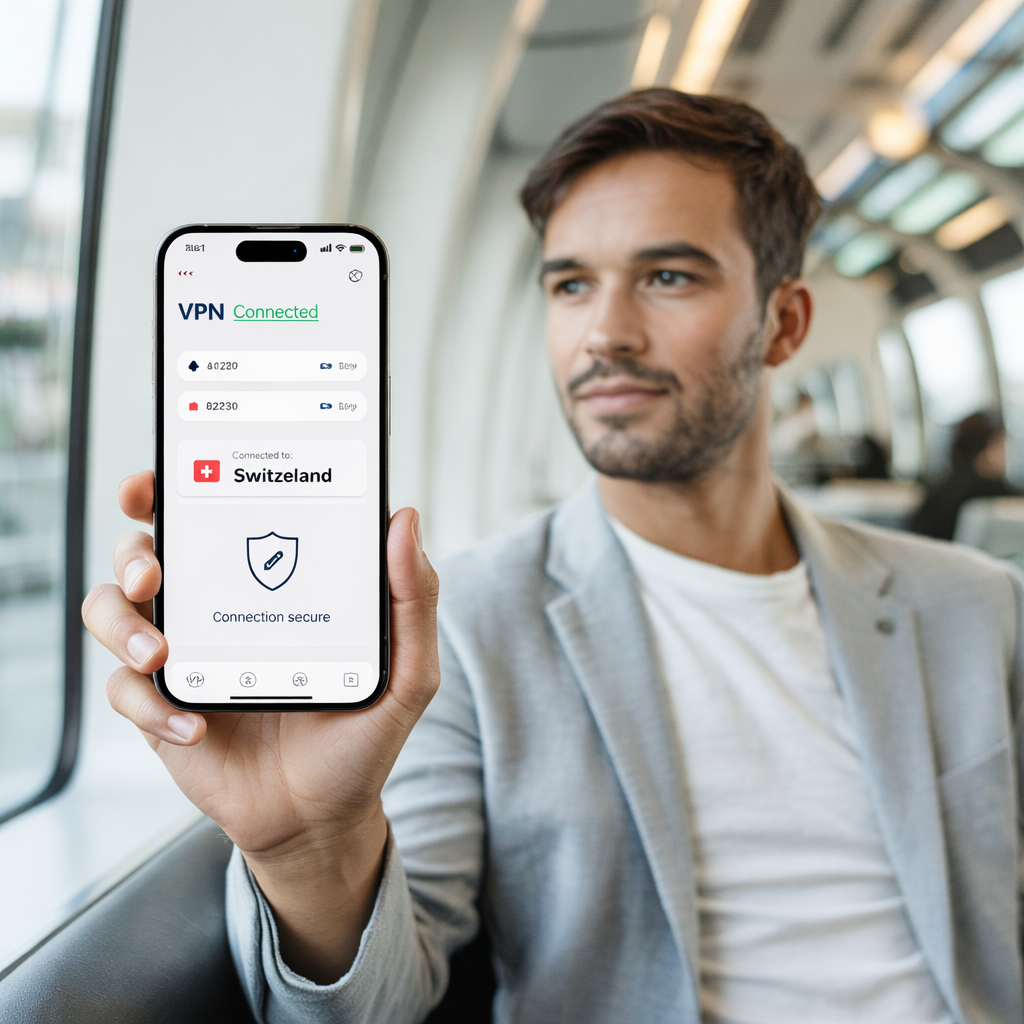
VPN-App für das iPhone
Viele iPhone-Nutzerinnen und -Nutzer gehen davon aus, dass die integrierten Sicherheitsfunktionen von Apple bereits ausreichen. Tatsächlich bietet iOS solide Grundabsicherung – dennoch ersetzt dies kein vollwertiges VPN.
Gerade in der Schweiz, wo Smartphones intensiv für Online-Banking, Streaming und mobiles Arbeiten genutzt werden, gewinnt zusätzlicher Datenschutz zunehmend an Bedeutung.
Warum ein VPN auf dem iPhone sinnvoll ist
Ein VPN ergänzt die bestehenden Schutzmechanismen Ihres Geräts. Während iOS auf Systemebene gut abgesichert ist, schützt ein VPN Ihre aktive Internetverbindung.
Einige zentrale Vorteile:
Mehr Privatsphäre unterwegs
Ein VPN verschlüsselt den Datenverkehr zwischen Ihrem iPhone und dem Internet. Dadurch wird es schwieriger, Ihre Aktivitäten nachzuvollziehen – insbesondere in öffentlichen WLAN-Netzen, etwa in Cafés, Hotels oder im Zug.
Schutz vor Tracking und unerwünschter Datensammlung
Durch das Verbergen Ihrer IP-Adresse reduziert ein VPN standortbezogenes Tracking und erschwert personalisierte Profilbildung.
Zusätzliche Sicherheitsfunktionen
Viele Anbieter integrieren optionale Funktionen wie Werbe- und Tracker-Blocker oder Schutzmechanismen gegen schädliche Domains.
Zugriff auf internationale Inhalte
Mit einer VPN-App können Sie Ihren virtuellen Standort ändern. So lassen sich – je nach Anbieter – zusätzliche Streaming-Inhalte abrufen, etwa bei Reisen ins Ausland.
Ist ein iPhone ohne VPN unsicher?
Nicht zwingend – Apple setzt hohe Sicherheitsstandards um. Ein VPN dient jedoch als zusätzliche Schutzschicht, besonders wenn Sie häufig unterwegs sind oder grossen Wert auf digitale Privatsphäre legen.
Wie wir VPN-Dienste bewerten
Unsere Bewertungen basieren auf einer unabhängigen Analyse mit Fokus auf die Schweiz.
Wir prüfen:
- Sicherheit & No-Logs-Richtlinie
- Schutz vor IP- und DNS-Leaks
- Geschwindigkeit & Serverstandorte (inkl. CH/EU)
- Streaming- & P2P-Eignung
- Bedienbarkeit auf allen Geräten
- Transparente Preise & Garantien